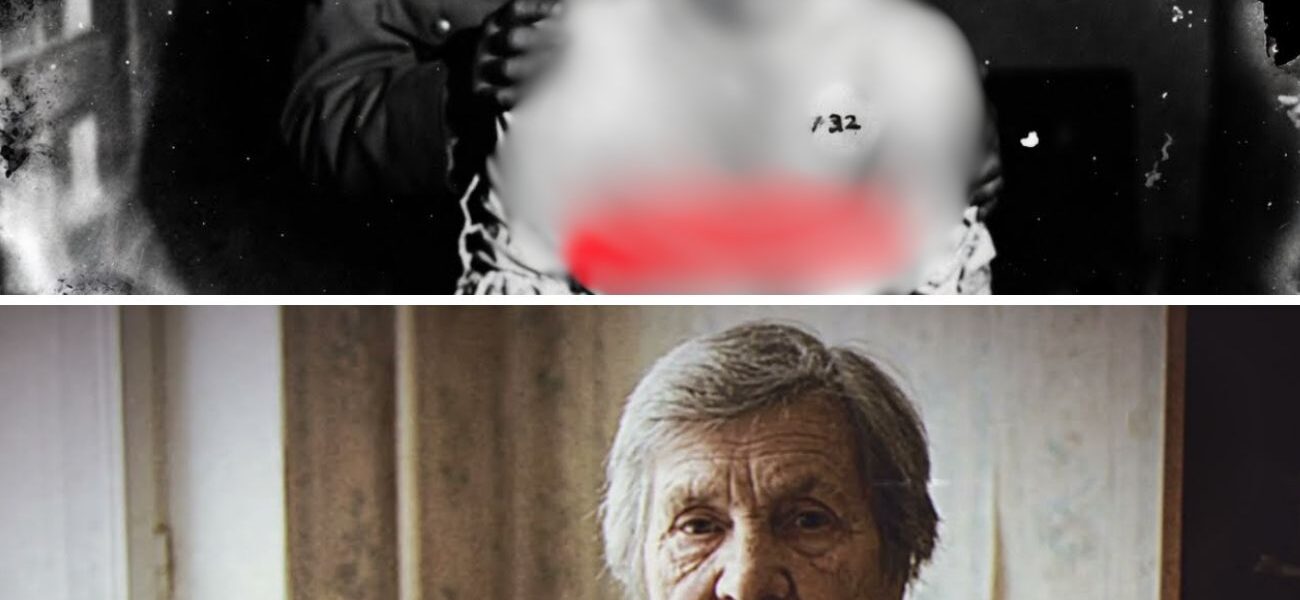

She Thought a Nazi Officer Saved Her… The Truth Was Far Worse
In 1942, during the brutal years of World War II, thousands of young people from occupied Soviet territories were captured and transported to Germany for forced labor. Among them was a young woman named Katerina Pavlovna Sokolova.
She was barely out of her teens when German patrols began raiding neighborhoods, searching for anyone strong enough to work. At first, her family managed to hide her in their cellar when soldiers came knocking. For hours she lay beneath sacks and old cloth, barely breathing as heavy boots stomped above her head.
That time, she survived.
But only a few months later, hunger forced her outside. Her family had not eaten properly for days, and she went to the market hoping to buy bread. On the street corner, a German patrol stopped her.
Within hours she was pushed onto a transport train filled with other young prisoners. The cattle wagon was packed so tightly that there was hardly room to move. For days the train traveled west, carrying them deeper into Germany.
When the doors finally opened, the prisoners were lined up for inspection.
That was when a German officer suddenly pointed at her.
For a brief moment, Katerina believed she had been spared the worst fate. Being chosen meant she would not be sent to the hardest labor camps like the others.
But she soon learned the terrifying truth.
Instead of freedom, she became known among the guards by a chilling nickname: “The Captain’s Toy.”
What that name meant, and what happened behind the closed doors of the officer’s quarters, was something Katerina could not bring herself to describe for decades.
Even after the war ended and she returned home, she told no one. Not her children. Not her grandchildren. Only fragments escaped during sleepless nights when memories returned.
For 58 years, the full story remained buried in silence.
Until she finally decided that the truth — no matter how painful — deserved to be remembered.