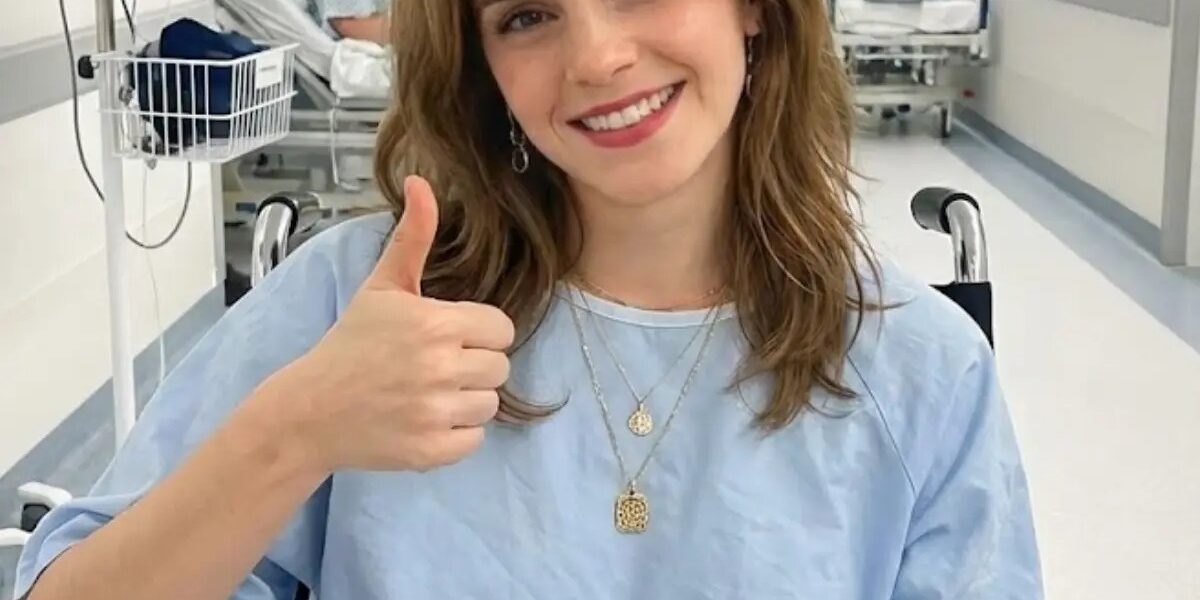

“SHE GAVE US HER VOICE FOR A GENERATION… NOW SHE NEEDS US.” For the first time since stepping back from the spotlight, Emma Watson has finally spoken — and her words carried a vulnerability fans haven’t heard in years. It wasn’t polished. It wasn’t performative. It was gentle, sincere, and quietly courageous. She spoke about a long period of reflection, about relearning how to listen to herself, and about the strength she draws from family, purpose, and the messages of support sent by people around the world while she chose silence. There was no bitterness, no regret — only clarity and gratitude. Then came the words that landed heavily on every heart: “I’m still finding my way. But I don’t have to do it alone.” In that moment, the icon faded away, and what remained was a woman asking for understanding, compassion, and hope — the very gifts she has offered her audience for years through her work, her courage, and her voice.
For the first time in years, Emma Watson is speaking publicly with a level of openness that feels markedly different from anything she has shared before. There is no red carpet, no carefully staged press tour, no cinematic reveal. Instead, there is a quiet honesty — measured, reflective, and deeply human — that has resonated strongly with fans around the world.
Watson, long regarded as one of Hollywood’s most thoughtful and principled figures, has spent much of the past few years away from the spotlight. While speculation about her career, her activism, and her future has circulated endlessly online, she herself remained largely silent. Until now.
When she finally chose to speak, it wasn’t to promote a project or defend a headline. It was to explain, in her own words, what it means to step back, to reassess, and to learn how to move forward without losing oneself in the noise.

Her voice, both literal and figurative, was softer than audiences might expect. Gone was the polished cadence of award stages and international forums. In its place was something more intimate — a woman reflecting on growth, pressure, and the cost of being constantly perceived.
“I had to learn how to listen to myself again,” Watson shared. It was a simple sentence, but one that carried weight. For someone who entered the public eye as a child and grew up under relentless scrutiny, the act of reclaiming inner clarity is no small task.
She spoke candidly about the emotional fatigue that can come from living life on display. The expectations — to always have the right answer, the right stance, the right words — eventually became overwhelming. Rather than pushing through, Watson made the deliberate decision to pause.
That pause, she explained, was not about retreating from the world, but about reconnecting with it on her own terms.
During her time away, Watson leaned heavily on family and close friends. She also returned to the foundational values that have guided her for years: education, purpose, and personal integrity. Faith, in a broad and personal sense, played a role as well — not necessarily religious doctrine, but trust in time, patience, and the belief that clarity follows stillness.

What stood out most to those listening was what Watson did not say. There were no complaints about fame, no resentment toward the industry, no bitterness toward public opinion. Instead, she expressed gratitude — for the support she received, for the space she was able to take, and for the messages from fans who respected her silence rather than demanding answers.
“I read more than people realize,” she admitted. “And those messages mattered.”
Then came the moment that shifted the tone entirely. In a rare break from her composed public image, Watson acknowledged uncertainty.
“I’m still finding my way,” she said. “But I don’t have to do it alone.”
It was not a dramatic confession, yet it landed with profound emotional impact. In that moment, the carefully constructed idea of Emma Watson — the role model, the activist, the symbol — fell away. What remained was a person asking for understanding, patience, and compassion.
For many fans, that vulnerability felt like a mirror. Watson has spent years using her platform to speak about equality, empathy, and shared humanity. Now, she was embodying those principles in the most personal way possible.
Cultural commentators were quick to note the significance of her words. In an era that demands constant visibility and instant commentary, choosing reflection over reaction is increasingly rare. Watson’s message subtly challenged the idea that relevance requires perpetual output.

Her career, after all, speaks for itself. From her early success in a globally beloved franchise to her later work in independent film, fashion ethics, and gender advocacy, Watson has consistently prioritized meaning over momentum. This moment appears to be no exception.
Industry insiders suggest that Watson is not stepping away permanently, but recalibrating. Projects may come, or they may not — and that uncertainty, she implied, is something she is learning to accept rather than fear.
What makes this chapter particularly compelling is its universality. While Watson’s life is undeniably extraordinary, the emotions she described are not. Burnout, self-questioning, and the need for support are experiences shared by millions, even if they play out far from cameras and headlines.
By speaking with such restraint and sincerity, Watson reminded audiences that strength does not always look like confidence. Sometimes, it looks like honesty.
As the conversation around mental health, boundaries, and self-definition continues to evolve, her words arrive at a moment when many are quietly asking similar questions about their own lives.
Emma Watson may have given a generation unforgettable characters, powerful speeches, and a public example of conscience-driven fame. Now, she is offering something different — a reminder that even those we admire most are still learning how to move forward.
And perhaps that is why her message has resonated so deeply. Not because it was dramatic or headline-grabbing, but because it was real.
“She Gave Us Her Heart on Screen for Decades — Now Anne Hathaway Is Speaking From the Quietest, Most Honest Place of All”

For years, Anne Hathaway has been one of Hollywood’s most familiar faces — a performer whose range stretches effortlessly from fairy-tale princess to Oscar-winning dramatic force. She has sung, cried, transformed, and disappeared into roles that shaped entire generations of moviegoers. Yet behind the polished red-carpet appearances and carefully chosen public words, Hathaway has recently been living through a chapter far removed from scripts and spotlights.
Now, after a long period of relative silence, Anne Hathaway is finally speaking — not with the practiced cadence of a press tour interview, but with a softness and sincerity that has caught fans off guard.
It is not a dramatic announcement. There are no headlines about scandal, no shocking revelations designed to dominate social media cycles. Instead, her words feel personal, measured, and deeply human. Those close to the actress describe her voice as calm but fragile, carrying a tenderness rarely heard from someone so accustomed to performing strength.

Hathaway spoke openly about a prolonged period of recovery — emotional, mental, and personal. While she did not attach her experience to a single defining event, she acknowledged that the past few years have required her to slow down in ways she never expected. “I had to learn how to listen to myself again,” she shared, emphasizing patience over productivity and healing over public expectation.
In an industry that thrives on constant visibility, stepping back is often misread as weakness or decline. Hathaway’s reflection challenges that assumption directly. She spoke about how difficult it was to accept stillness after decades of relentless motion — film sets, premieres, interviews, and the unspoken pressure to always appear “fine.”
“There’s a version of strength that looks loud,” she said, according to those present. “And then there’s the kind that happens quietly, when no one is watching.”
Family, she explained, became her anchor. Away from the cameras, Hathaway leaned into everyday moments — routines that rarely make headlines but define real life. She also spoke about faith, reflection, and the grounding effect of reconnecting with values that predate fame. In that space, she found perspective not as a global celebrity, but as a woman navigating uncertainty like anyone else.

Perhaps most striking was her acknowledgment of the role fans played during her silence. Without issuing statements or updates, Hathaway was still acutely aware of the messages of encouragement sent her way — letters, comments, quiet expressions of concern that reached her even when she wasn’t responding publicly. “You don’t realize how much kindness can carry you,” she noted, “until you’re the one being carried.”
What makes this moment resonate is what Hathaway did not say. There were no complaints about Hollywood, no bitterness about criticism, no attempt to rewrite past narratives. Instead, she chose gratitude — for the work she’s been able to do, for the life she has built, and for the people who continue to support her even when she steps out of view.
Then came the sentence that lingered long after she finished speaking.
“I’m healing,” she said. “But I can’t do it alone.”
In those words, the distance between icon and audience quietly collapsed. The Oscar winner, the fashion fixture, the actress who has portrayed characters larger than life — all of that receded. What remained was a person asking for compassion, understanding, and patience.

For fans who have followed Hathaway’s career from The Princess Diaries to Les Misérables to Everything Everywhere All at Once, the moment felt deeply personal. She has spent decades offering emotional truth through her performances — allowing audiences to feel seen, understood, and less alone. Now, she is standing on the other side of that exchange.
Industry insiders say Hathaway is not retreating permanently. Projects remain on the horizon, and her creative drive is very much intact. But she is approaching her future differently — more selectively, more intentionally, and with a clearer understanding of her own limits.
Her message arrives at a time when conversations about mental health, burnout, and balance are finally becoming unavoidable in Hollywood. Hathaway’s willingness to speak without spectacle adds a powerful, credible voice to that dialogue — one that doesn’t rely on extremes, but on honesty.
In a culture that often demands constant output, Anne Hathaway’s quiet courage feels radical. She is reminding audiences that healing is not linear, that strength does not always announce itself, and that even those who appear to have everything still need connection.
She gave us her heart on screen for decades. Now, she’s asking for something far simpler — and far braver.
Understanding. Support. And the space t